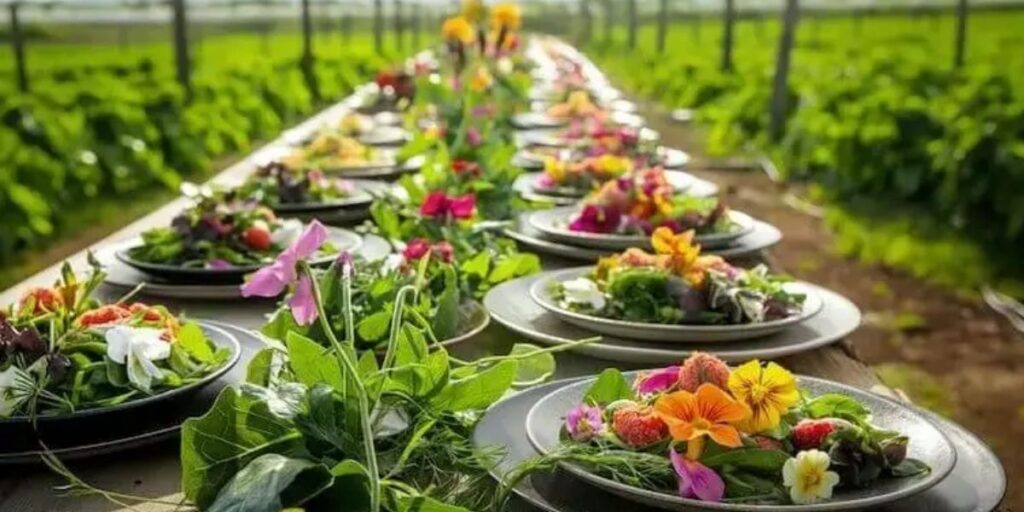
India has a rich agricultural heritage built on generations of farming knowledge, diverse crops, traditional food practices, and a close connection between farmers and the land. From turmeric and spices to jaggery, millets, pulses, and other agricultural products, India produces a wide variety of foods enjoyed both domestically and around the world.
But have you ever wondered what happens between the farm where a crop is grown and the food that finally reaches your kitchen?
The journey from farm to table involves much more than growing and selling a product. It includes sourcing, quality assessment, cleaning, processing, packaging, storage, and responsible handling. At Mahi Natural Farm, we believe every step matters when it comes to delivering quality agricultural products.
In this article, let’s explore the farm-to-table journey and why responsible sourcing and quality management are important.
What Does “Farm to Table” Mean?
“Farm to table” describes the journey of food from agricultural production to the consumer.
The journey may involve several stages:
Farm and cultivation
Harvesting
Sourcing and selection
Cleaning and processing
Quality checking
Packaging
Storage and transportation
Delivery to consumers
Each stage can influence the quality, freshness, safety, and overall experience of the final product.
For this reason, producing good food is not only about growing a crop. It is about maintaining quality throughout the entire supply chain.
Step 1: Understanding the Source
The first step in the journey is understanding where agricultural products come from.
India has different agricultural regions, each with its own climate, soil conditions, farming traditions, and crop varieties. These differences can influence the characteristics of agricultural products.
At Mahi Natural Farm, responsible sourcing begins with understanding the origin and characteristics of the products we work with.
Knowing the source helps create greater transparency and allows businesses to make better decisions about procurement and quality.
Step 2: Selecting Quality Agricultural Products
Not every agricultural product is the same.
Quality can vary based on crop variety, growing conditions, harvesting practices, maturity, moisture, storage, handling, and transportation.
Proper selection is therefore an important part of the farm-to-table process.
Depending on the product, factors such as appearance, aroma, texture, moisture level, cleanliness, and other quality parameters may be considered.
Careful sourcing and selection help ensure that products entering the next stage meet the desired quality requirements.
Step 3: Cleaning and Processing
After sourcing, many agricultural products require cleaning, grading, sorting, or processing before they are ready for consumers.
For example, spices may require cleaning and grinding, while jaggery may be processed into different forms such as blocks or powder.
Processing should be carried out using appropriate methods and hygienic conditions.
The objective is to prepare the product while maintaining its desired characteristics and meeting applicable food-safety and quality requirements.
Step 4: Quality and Food Safety
Food safety is an important part of the farm-to-table journey.
Agricultural products need to be handled carefully to minimize contamination risks during processing, storage, packaging, and transportation.
Depending on the product and market, businesses may need to consider applicable food regulations, testing requirements, labeling rules, and certifications.
At Mahi Natural Farm, quality is viewed as a process rather than a single inspection at the end.
Good sourcing, appropriate handling, hygienic processing, suitable packaging, and responsible storage all contribute to the quality of the final product.
Step 5: Packaging
Packaging plays an important role in protecting agricultural products during transportation and storage.
Good packaging can help protect products from moisture, dust, physical damage, and other environmental factors.
Packaging also provides consumers with important information such as product name, ingredients, net quantity, batch details, storage instructions, and other information required by applicable regulations.
For export products, packaging and labeling requirements can be particularly important because different countries may have specific food regulations.
Step 6: Storage and Transportation
Even a high-quality agricultural product can be affected by poor storage or transportation.
Temperature, humidity, exposure to moisture, cleanliness, packaging integrity, and storage duration can all influence product quality.
Proper storage conditions should therefore be selected according to the characteristics of each product.
Transportation is another important stage. Products need to be protected during movement from suppliers and processing facilities to warehouses, distributors, retailers, or consumers.
Why Traceability Matters
Traceability means being able to track a product through different stages of the supply chain.
It can help businesses understand where products came from, how they were handled, and where they were distributed.
For consumers, better traceability can create greater confidence because it provides more information about the origin and journey of their food.
As consumers become increasingly interested in food sourcing, transparency and traceability are becoming important parts of modern food businesses.
India’s Agricultural Heritage
India is one of the world’s major agricultural countries and has enormous diversity in crops and food traditions.
Different regions are known for different agricultural products. Turmeric, spices, pulses, cereals, millets, sugarcane products, fruits, vegetables, and many other crops contribute to India’s agricultural identity.
Traditional knowledge also plays an important role in Indian agriculture and food culture.
Preserving this agricultural heritage while adopting modern quality and food-safety practices can help Indian agricultural products reach new consumers and markets.
From Indian Farms to Global Markets
Indian agricultural products are increasingly connected to international markets.
Exporting food products requires more than simply finding an overseas buyer. Exporters need to understand the destination country’s regulations, product specifications, packaging requirements, labeling rules, documentation, and food-safety expectations.
For businesses working with international buyers, consistency and transparency are especially important.
A strong farm-to-table supply chain can help Indian agricultural products compete in global markets while maintaining focus on quality and responsible sourcing.
What Makes Mahi Natural Farm Different?
At Mahi Natural Farm, our philosophy is simple: good products begin with responsible sourcing and careful handling.
We aim to connect India’s agricultural heritage with consumers who value quality, transparency, and responsible food choices.
Our approach focuses on the complete journey rather than looking at the finished product alone.
From selecting agricultural products to processing, packaging, and delivering them to consumers, every stage provides an opportunity to maintain quality.
We also believe that consumers should have access to clear and useful information about the products they purchase.
Building a Better Connection Between Farmers and Consumers
Modern food supply chains can sometimes create a large distance between farmers and consumers.
The farm-to-table approach helps bring attention back to the origin of food.
When consumers understand how their food is grown, sourced, processed, and packaged, they can make more informed purchasing decisions.
For agricultural businesses, this connection also creates an opportunity to support farmers, promote Indian agricultural products, and build long-term relationships with customers.
Final Thoughts
The journey from farm to table is a process involving many people and many important steps.
Growing the crop is only the beginning. Sourcing, selection, processing, quality control, food safety, packaging, storage, transportation, and transparency all contribute to the final product that reaches the consumer.
At Mahi Natural Farm, we believe that quality should be considered throughout this journey.
By combining India’s rich agricultural heritage with responsible sourcing and careful product handling, we aim to bring quality Indian agricultural products closer to consumers in India and around the world.
Because every good food story begins with the farm.
Frequently Asked Questions
- What does farm to table mean?
Farm to table refers to the journey of food from agricultural production through sourcing, processing, packaging, distribution, and finally to the consumer.
- Why is agricultural product sourcing important?
Responsible sourcing helps businesses understand the origin and quality of products and supports better control of the supply chain.
- Why is food packaging important?
Packaging helps protect food products during storage and transportation and provides consumers with important product information.
- What is food traceability?
Food traceability is the ability to track a product through different stages of the supply chain, from its source to its final destination.
- Why are Indian agricultural products popular globally?
India has diverse agricultural regions, traditional farming knowledge, and a wide range of crops and food products, including spices, turmeric, pulses, cereals, millets, and sugarcane-based products.
Keywords: farm to table, Indian agricultural products, Mahi Natural Farm, Indian farming, agricultural products in India, quality agricultural products, farm to consumer, food traceability, Indian food products, sustainable agriculture