Jaggery and sugar are two traditional sweeteners commonly used in Indian kitchens. While both are primarily derived from sugarcane, they are produced differently and have different characteristics, flavors, textures, and culinary uses.
Jaggery has been part of Indian food traditions for centuries and continues to be popular among consumers looking for traditional alternatives to refined sugar.
But what is the difference between jaggery and sugar? How is jaggery made? And what should you look for when buying good-quality jaggery?
In this article, we explore the key differences between jaggery and sugar and provide practical tips for selecting and storing quality jaggery.
What Is Jaggery?
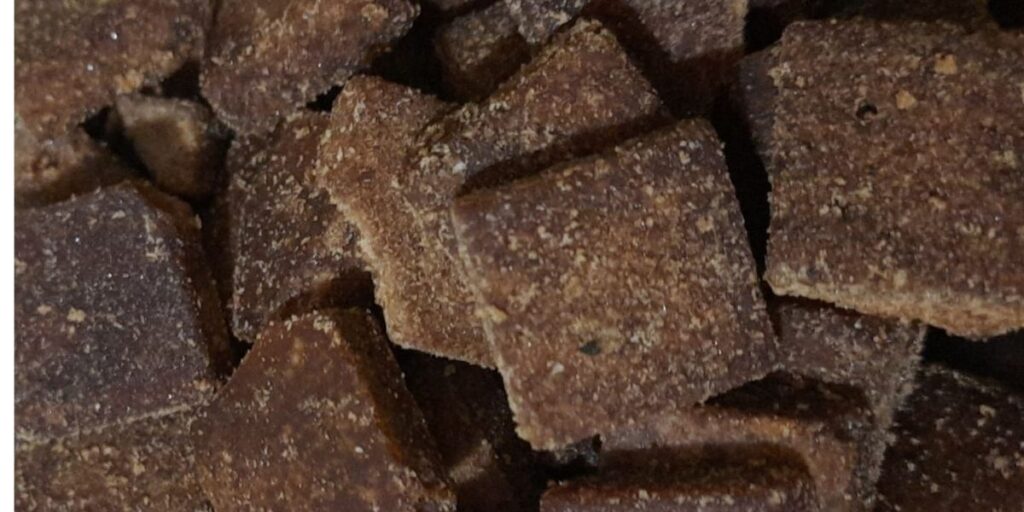
Jaggery is a traditional, minimally refined sweetener commonly produced from sugarcane juice. It is widely used in India and other parts of Asia and is available in different forms, including blocks, cakes, granules, and powder.
Unlike refined white sugar, jaggery generally undergoes less refining. During production, sugarcane juice is extracted, filtered or clarified, concentrated by heating, and then cooled and shaped into the desired form.
The final color, texture, aroma, and flavor of jaggery can vary depending on the sugarcane variety, production method, processing conditions, and storage.
What Is Sugar?
Table sugar, commonly known as white sugar, is primarily sucrose. Commercial sugar production involves several processing and purification stages designed to produce crystals with a consistent appearance, color, and sweetness.
White sugar is widely used in households and the food industry because of its consistent sweetness, easy handling, and long shelf life.
Jaggery vs Sugar: Key Differences
Although jaggery and sugar can both be used to sweeten food and beverages, there are several important differences between them.
- Processing
One of the biggest differences is the level of processing.
Jaggery generally undergoes fewer refining steps and retains some of the non-sugar components naturally present in sugarcane juice.
White sugar undergoes more extensive purification and crystallization to produce a highly refined product.
- Color
Jaggery can range from golden yellow to light brown or dark brown, depending on the raw material and processing method.
White sugar is generally white because of the purification and refining processes used during production.
Color alone, however, should not be considered a complete indicator of jaggery quality.
- Flavor
Jaggery has a distinctive caramel-like, earthy, or molasses-like flavor that makes it popular in traditional Indian recipes.
White sugar has a relatively neutral sweetness, making it suitable for a wide range of foods and beverages.
- Texture
Jaggery may be sold as a solid block, soft lump, granule, or powder.
Sugar is commonly available as uniform crystals or fine powdered forms.
The texture of jaggery can change depending on moisture, storage conditions, and processing.
- Culinary Uses
Both jaggery and sugar have many culinary applications.
Jaggery is traditionally used in:
• Indian sweets
• Laddoos
• Chikkis
• Traditional beverages
• Desserts
• Sauces and chutneys
• Certain savory dishes
• Tea and other drinks
Sugar is commonly used in:
• Tea and coffee
• Cakes and biscuits
• Desserts
• Confectionery
• Beverages
• Food processing
The choice between jaggery and sugar often depends on the recipe, desired flavor, texture, and personal preference.
Is Jaggery Healthier Than Sugar?
Jaggery is sometimes promoted as a healthier alternative to sugar. However, it is important to understand that jaggery is still a concentrated source of sugars.
Because jaggery generally undergoes less refining, it can retain small amounts of minerals and other components from sugarcane. However, these amounts can vary considerably and should not be used to make broad health claims.
For people monitoring their sugar intake, jaggery should still be consumed in moderation.
The best choice depends on individual dietary needs, overall eating habits, and the quantity consumed.
How Is Jaggery Made?
Traditional sugarcane jaggery production generally involves several stages.
Step 1: Sugarcane Selection
Good-quality sugarcane is selected as the raw material. Sugarcane quality can influence the characteristics of the final jaggery.
Step 2: Juice Extraction
The sugarcane is crushed to extract the juice.
Step 3: Filtration and Clarification
The extracted juice is filtered and may undergo clarification to remove unwanted impurities.
Step 4: Concentration
The juice is heated in suitable vessels to evaporate water and concentrate the sugars.
Step 5: Cooling and Setting
Once the concentrated mass reaches the appropriate consistency, it is cooled and shaped into blocks, pieces, granules, or other forms.
Step 6: Packaging
Finished jaggery should be packed appropriately to protect it from moisture, contamination, and physical damage during storage and transportation.
How to Choose Quality Jaggery
When buying jaggery, consumers should consider several factors rather than relying on color alone.
- Check the Source
Look for information about where the jaggery comes from and who produced or packed it.
Clear sourcing information can help consumers make more informed purchasing decisions.
- Check the Packaging
Choose properly packed products with clear information such as product name, net quantity, batch details, manufacturer or packer information, and applicable food-labeling information.
- Look at the Texture
Good jaggery should have a texture appropriate for its product type.
Excessive stickiness, unusual moisture, or significant deterioration may indicate poor storage conditions.
- Check the Aroma and Flavor
Quality jaggery generally has a characteristic sugarcane-derived aroma and flavor.
An unusual chemical smell, unpleasant odor, or significantly abnormal taste may be a reason to avoid the product.
- Check for Foreign Materials
Jaggery should be free from visible foreign matter and should be handled and packed under appropriate hygienic conditions.
- Consider Food-Safety Testing
For commercial buyers and businesses, laboratory testing can provide more meaningful information about product quality and safety than appearance alone.
Depending on the intended market, relevant testing may include microbiological, chemical, contaminant, or other product-specific parameters.
Jaggery Blocks vs Jaggery Powder
Jaggery is available in several forms, with blocks and powder being two popular options.
Jaggery blocks are commonly used in traditional cooking and sweets. They can have a longer handling life when appropriately packaged and stored.
Jaggery powder is convenient for measuring and mixing into beverages, recipes, bakery products, and food preparations.
The best form depends on how you plan to use the product.
How to Store Jaggery
Proper storage is important because jaggery can absorb moisture from the surrounding environment.
For best results:
• Keep jaggery in an airtight or moisture-resistant package.
• Store it in a cool and dry location.
• Avoid prolonged exposure to humidity.
• Use clean, dry utensils when handling powdered jaggery.
• Follow the storage instructions provided on the product packaging.
Why Quality Matters at Mahi Natural Farm
At Mahi Natural Farm, we believe that quality begins with responsible sourcing and continues throughout processing, packaging, storage, and delivery.
Our approach is focused on connecting consumers with Indian agricultural and traditional food products while maintaining attention to product quality and transparency.
For products such as jaggery, factors including raw material selection, processing, hygiene, packaging, storage, and supply-chain handling all matter.
We believe consumers deserve clear product information so they can make informed choices.
Jaggery for Indian and Global Markets
Indian jaggery has a long-standing place in traditional food culture and has potential applications in both domestic and international markets.
As consumers around the world show increasing interest in traditional foods and minimally processed food products, Indian agricultural products can reach new markets.
However, businesses exporting jaggery need to consider the food regulations, labeling requirements, documentation, packaging standards, and product specifications applicable in the destination country.
Final Thoughts
Jaggery and sugar are both widely used sweeteners, but they differ in processing, flavor, appearance, texture, and culinary applications.
Jaggery offers a distinctive traditional flavor and is an important part of Indian food culture. At the same time, it is important to remember that jaggery is still a concentrated source of sugars and should be consumed appropriately.
When choosing jaggery, look beyond color and appearance. Consider the source, packaging, texture, aroma, hygiene, storage conditions, and available quality information.
At Mahi Natural Farm, we believe that better food choices begin with better information. Our goal is to connect consumers with quality Indian agricultural products while respecting India’s rich farming and food traditions.
Frequently Asked Questions
- Is jaggery made from sugarcane?
Yes. Most traditional jaggery in India is produced from sugarcane juice, although jaggery can also be made from other sources such as palm sap.
- Is jaggery the same as brown sugar?
No. Jaggery and brown sugar are different products. Jaggery is generally produced by concentrating sugarcane juice with limited refining, while brown sugar is typically refined sugar containing or coated with molasses.
- Can jaggery replace sugar in recipes?
In many recipes, jaggery can be used instead of sugar, but the result may differ in sweetness, color, flavor, moisture, and texture.
- Does jaggery contain sugar?
Yes. Jaggery is primarily composed of sugars and should be consumed in moderation.
- How should jaggery be stored?
Jaggery should generally be stored in a cool, dry place in moisture-resistant or airtight packaging to help prevent moisture absorption and quality deterioration.
- What is the best way to identify good-quality jaggery?
Do not judge quality by color alone. Consider the product’s source, packaging, aroma, texture, cleanliness, storage conditions, and applicable quality or food-safety information.
Keywords: jaggery vs sugar, jaggery benefits, pure jaggery, natural jaggery, sugarcane jaggery, jaggery powder, jaggery blocks, how jaggery is made, how to choose jaggery, Indian jaggery, quality jaggery, Mahi Natural Farm